


Growing old doesn’t have to be painful. We’ve all faced growing pains in our younger days, but as you get older, diseases and illnesses tend to sneak up on you in a way that you’d never expect.
No longer are you just susceptible to the standard flu or cold, but now the chance of contracting fatal illnesses (such as heart disease – which we’ve already covered on how to properly mitigate) is higher than before.
One of such diseases is diabetes, and just like heart disease, it spares no expense in making your days a miserable experience.
In a 2014 statistics report, it has been reported that close to 30 million people in the US alone suffer from diabetes, with about 1 in 4 seniors (65 and older) being a part of that number.
Let that sink in for a moment. The prevalence of diabetes is definitely on the rise, and if not properly monitored, can have serious consequences on your health and happiness.
On a personal note, I’ve had family members suffer from diabetes as they age, and the effects can be crippling, literally.
Definitely something sobering to think about, but instead of letting it hinder our progress, let’s use it as motivation to get our health and lives right.
Once again, we’ll be focusing on the essentials to making sure we mitigate our chances of contracting such a disease: and it all starts with nutrition.
Sugars
Think of diabetes, and immediately we think of sugars. And of course, the general consensus would be to cut back on as much forms of starchy goodness as possible.
And while that’s true, most people and diabetics simply do not know how to properly ease themselves into a new ‘sugar-free’ diet immediately – which is why they fail to do so at all.
This Isn’t A Deprivation, But A Lifestyle Change
Don’t believe the myth that a ‘diabetic diet’ will require you to cut all forms of sugar from your life completely.
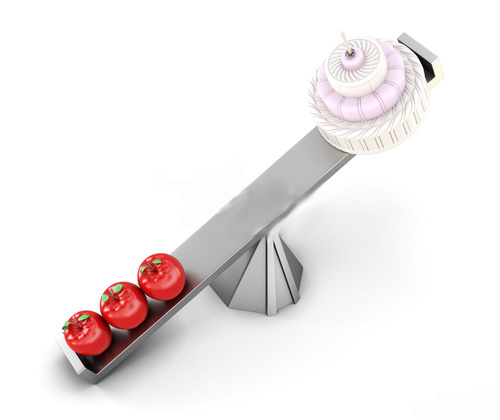
I don’t blame you if you think that way though. After all, we’re being bombarded with pictures like this all the time:

As humans, we need sugars – just the right, healthy types for your condition.
Remember: this isn’t about depriving yourself, but making the seamless change from one form of eating to another, more holistic one.
There are a whole myriad of options and alternatives to your regular sugar-filled meals, which we’ll cover later, but for now, simply remember our philosophy on nutrition:
Enjoy your favourite treats once in a while, as long as you plan properly and limit ‘hidden’ sugars (the ‘not as obvious’ ones found in soft drinks etc).
Same principle applies to carbs – this isn’t about cutting out all carbohydrates out of your regular diet, but limiting your serving size, portions, and replacing the regular starchy ones with whole-grain options.
Don’t worry, we’ll cover the exact foods for this later on.
Lastly, for those who are already diabetic, dispel the notion that you need special diabetic meals.
The principles of healthy eating are all the same whether you’re diabetic or not. Typically, expensive diabetic foods offer no special benefit as compared to regular healthy meals.
Plus, they probably taste a lot worse.
Break The Cycle
There has been no other time in human history where our species has an insatiable need to consume sugar as much as we do now.
It’s almost gotten to a point of an addiction.
Think about it: we’ve been so accustomed to have desserts right after our dinners (or maybe even breakfast/lunch sometimes), and how many times have you craved for something sweet right after eating a filling meal?
We don’t eat them because we’re hungry, but merely because we’re bored.
We need to get out of that vicious addictive cycle once and for all, without leaving us feeling deprived or suffering from any withdrawal symptoms.
The first step is to change our lifestyle habits, and the foods listed below should give you the head start you need to accomplish just that.
General Guidelines
We’ve taken the most common foods in a standard household, and given them healthy replacements for this to apply to as many people as possible.
(The foods on the left are to be avoided, while the foods on the right are the healthier alternatives.)
White Rice >> Brown Rice, Riced Cauliflower
White Potatoes >> Sweet Potatoes
Regular Pasta >> Whole-Wheat Pasta
Regular Bread >> Whole-Grain Bread
Regular Cereal >> High-Fiber Cereals
Instant Oatmeal >> Steel-Cut or Rolled Oats
Cornflakes >> Low-Sugar Bran Flakes
Don’t get obsessed over the minutae of the details. Instead, notice the patterns between the foods on the left versus the foods on the right.
The healthier alternatives are really just high-fibre food options, while the ones on the left are your typical, starchy options.
Once you understand this principle, it can be applied to any forms of food in your daily life.
That’s the beauty of understanding the deep principles behind the shallow tactics – it gives you flexibility and options, and doesn’t limit your lifestyle in any way.
For example:
– You should eat more healthy fats from raw nuts, olive oil or avocados instead of trans fat from deep-fried or partially hydrogenated foods.
– Eat more fruits and vegetables (the more colorful the better; for veges, the greener the better) as opposed to baked goods, sweets or desserts.
– Also, eat more fish or organic, free range chicken as opposed to processed meat or animals fed with antibiotics or growth hormones.
Starting to get the picture?
- Starchy vs High-Fibre
- Natural/Fresh/Organic vs Processed
They all fall under the same branch of healthy eating, and form the fundamentals for a good nutritional lifestyle which needs to be mastered.
A lot of this seems like common sense, but most people don’t even take the time to carefully select the foods they buy while grocery shopping.
And for those who are relatively new to nutrition, these general guidelines should serve as a good starting point for you to get back on track with your health.
Specific Guidelines
Now that we’ve covered some general guidelines, here are some other specific tips to take your ‘diabetic diet’ to the next level.
These tips serve well as general nutritional practices, but they are more tailored towards helping an individual overcome his ‘addiction’ to sugar, since the ‘diabetic diet’ is mainly focused on reducing the daily intake of sugars in one’s diet.
Start Off Any Meal With A Salad – Its been harped upon over and over again that green, leafy vegetables help to keep you full longer while not leaving you bloated.
By filling your stomach up even before you touch your main meal, the cravings for desserts or sweets will be greatly reduced as you’re already full but not feeling deprived one bit.
Plus, it soaks up starch and sugar. Without boring you with too much of the scientific details, the soluble fibre from the pulp of plants swells like a sponge in your intestines and traps starch and sugar in the niches between its molecules.
This fibre eventually dissolves, and releases glucose over time into your bloodstream slowly. Thus your body needs less insulin to handle it.
Apart from the scientific jargon, this is definitely a simple strategy, and simplicity is the ultimate sophistication after all right?
Eat Some Vinegar – Vinegar slows the breakdown of starch into sugar, and by doing this, your cravings will be greatly reduced as well.
In simple terms, since it takes a longer time for the starch to turn into sugar, your body ‘senses’ that there is still starch present in your body, hence it doesn’t send out the signals asking you to eat more sweets and replenish your stores of starch, as it already has a full supply in stock.
Another benefit, would be that vinegar also increases the body’s sensitivity to insulin, which helps to improve your body’s ability to store the carbs you eat as muscle rather than fat.
Killing two birds with one stone – not bad vinegar, not bad.
Live A Little, But Do It Right – We only have one life to live after all, and as I’ve been reiterating about in this post, we can eat our favourite foods only if we moderate ourselves properly.
If 80% of our nutrition is clean and good, then of course the 20% should be the reward for all your hard work you’ve put in to take care of your body and health.
With that said, there are ways to properly splurge and ensure you don’t end up wasting all the hard work and effort you’ve put into your health.
One of the ways, is ensuring you save your sweets for dessert. If you have to satisfy your cravings, make sure you do it at the right time.
If you eat sweets on an empty stomach, there’s simply nothing to impede the sugars from racing directly into your bloodstream.
Compare that to if you eat your sweets as desserts, and only as the last meal of your day – you’ll have all the built-in protection in your digestive tracks such as (healthy) fats, soluble fiber, vinegar and protein to keep your sugar levels on even keel.
Also, as a general rule of thumb, don’t eat more than what you can hold in the cup of your hand – anything more might result in a spill over leaving you bloated and regretful the next day (we’ve all been there haven’t we?)
Remember: there’s no point in having a healthy body if you lose your sanity in the process.
These occasional splurges will help you maintain that sanity, soothe your soul, and leave you happy, knowing that you’re still completely on track towards achieving a healthy lifestyle, while enjoying your favourite foods guilt-free.